
Palaeoecology - Fossils as Indicators of the Palaeoenvironment
Indoor Meeting
24th October 2026 13:00 BST
Sheffield Hallam University
Getting to Sheffield Hallam University
Sheffield Hallam is located near to the City Centre of Sheffield, the talks will take place in the Owen Building, Room 1028 accessed via the entrance to the reception on Hallam Square. The building is 5 minutes walk from the Sheffield train station, 7 minutes walk from the Sheffield Station tram stop and 6 minutes walk from Sheffield Interchange bus station.
Schedule
13:00 – 13:10 Introductions and welcomes
13:10 – 13:50 When Bristol was a Tropical Paradise - Oliver Weeks (Emanya Fossil Preparation and Conservation)
13:50 – 14:30 Cosmopolitanism during the Early Carboniferous (Tournaisian) in the Context of Late Palaeozoic Trends - Lila Blake (University of Leeds)
14:30 – 15:00 Refreshments
15:00 – 15:40 How do you Reconstruct a Food Web that Died 200 Million Years Ago? - Tanya Strydom (University of Sheffield)
15:40 – 16:20 Callovian Coleoids: Edge Effects and Palaeoecology at the Boundaries of Oxygen Minimum Zones - Ru Smith (University of Liverpool/Universiti Malaya)
16:20 – 16:30 Closing remarks
Abstracts
When Bristol was a Tropical Paradise
Oliver Weeks (Emanya Fossil Preparation and Conservation)
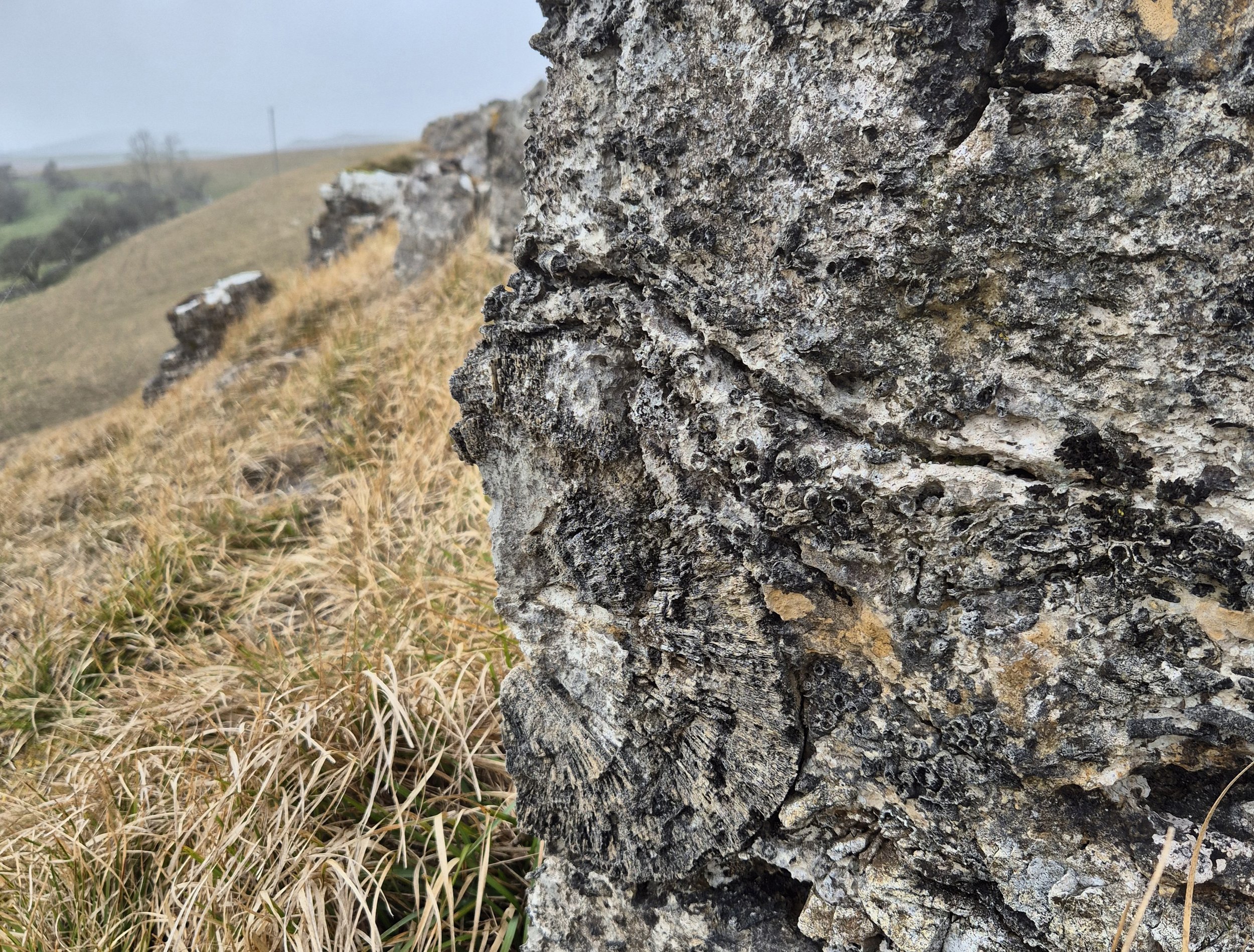
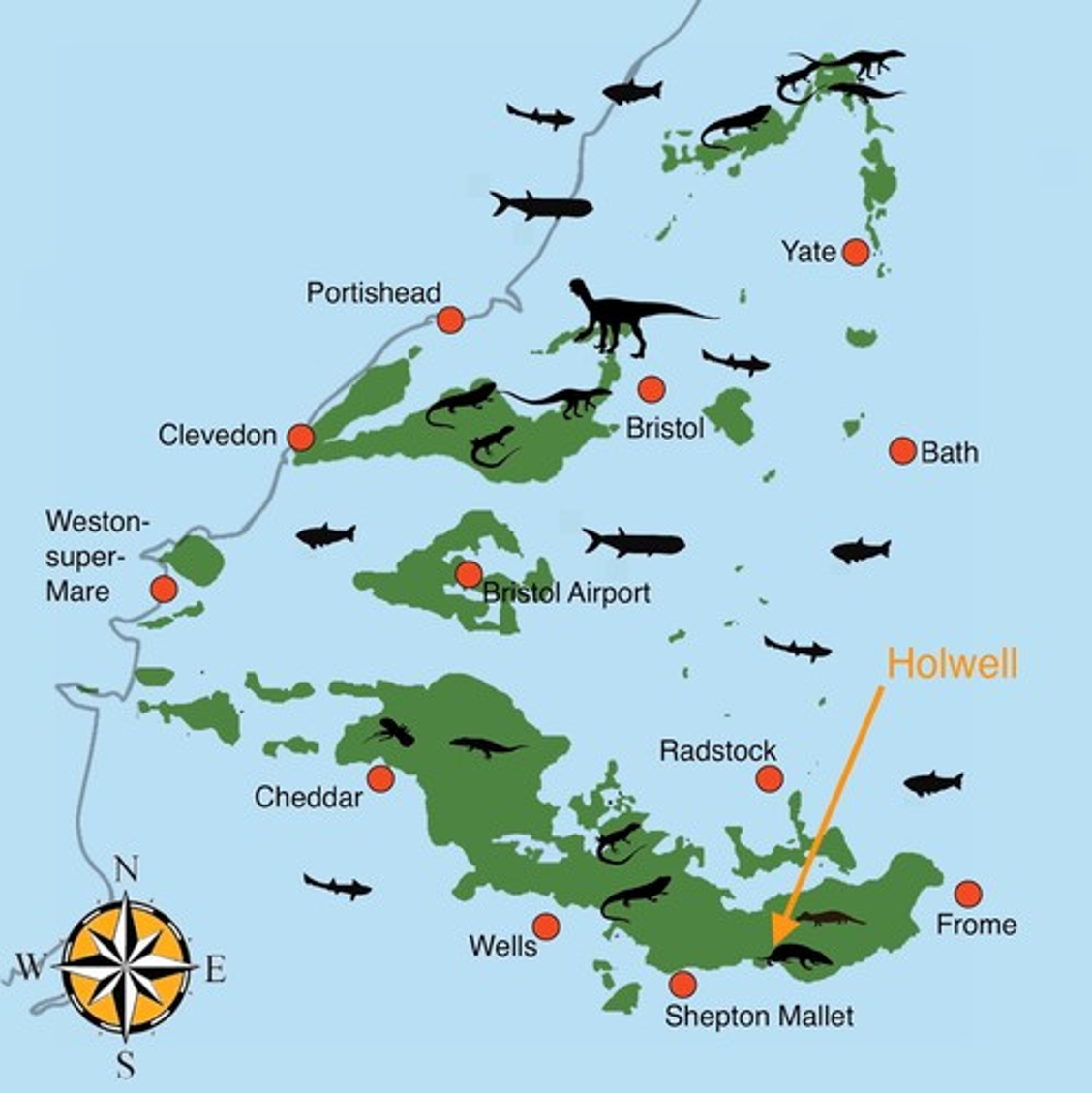
In 1855, while exploring the geology south of Bristol and Bath, Charles Moore discovered a complex of abnormal sedimentary deposits at Holwell near Frome. They were infills discordant to the bedding of the Carboniferous limestone and contained diverse Late Triassic fossil faunas. Fast forward 165 years and two Bristol university students, given the task of searching for early mammals in a 40 year old sediment sample, rediscovered what may potentially have been the continuation of that very first fissure deposit.
Despite not finding the coveted mammal remains the results of this study were much more exciting from a palaeoecological perspective giving an insight into the life of animals on the very margin of the Mendip palaeoislands, bridging the gap between the common marine bone bed deposits and terrestrial fissure fills found elsewhere in the region. We will see how fossils, landscape and geology give a dynamic insight into Bristol as a tropical paradise.
Cosmopolitanism during the Early Carboniferous (Tournaisian) in the Context of Late Palaeozoic Trends
Lila Blake (University of Leeds)
The global Hangenberg Crisis (~359 Ma) represents one of the major Phanerozoic extinction events, with greater than 50% marine invertebrate genera loss. The recovery and radiation of life following the Hangenberg Crisis was exceptionally slow; marine biodiversity remained at low levels for greater than 20 million years, potentially making this the longest aftermath of any biotic crisis of the Phanerozoic.
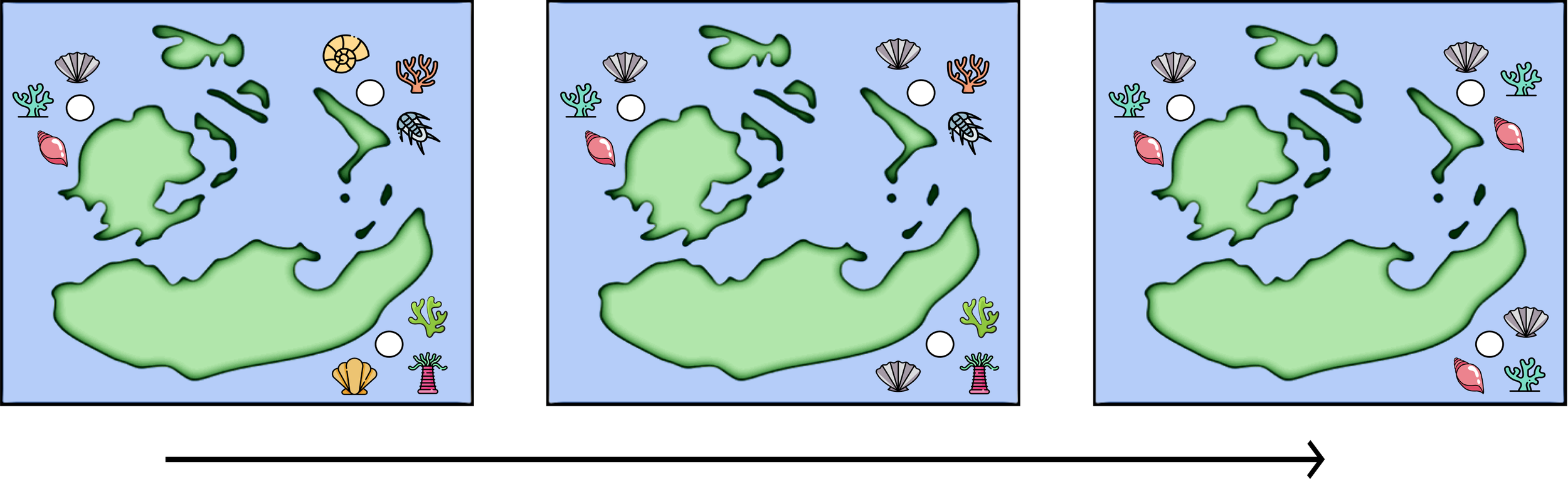
Here, we examine the biogeographic dynamics of marine invertebrates across the Devonian-Carboniferous in relation to post-extinction recovery patterns. Using a series of biogeographic metrics on a dataset of 4530 marine invertebrate genera, we identified two episodes of faunal cosmopolitanism: one in the Frasnian and another in the Tournaisian. A third potential cosmopolitanism episode in the Moscovian-Kasimovian is likely an artifact of restricted spatial sampling.
Comparing the biogeographic connectedness values of newcomers, survivors, and all genera in the Famennian and Tournaisian indicates that post-Hangenberg faunal cosmopolitanism was driven by the selective extinction of endemics and the geographic expansion of survivors. Low β-diversity during the Tournaisian supports the idea of an ecologically undersaturated Early Carboniferous ecosystem in which there is a low degree of competition for niche space, and hence, weaker selection pressures, resulting in slower diversification rates. Additionally, β-diversity partitioning reveals that biodiversity was rebuilt slowly and sequentially, with richness gradients recovering before strong geographic differentiation. Increased faunal cosmopolitanism alone is unlikely to fully explain why recovery took so long, with additional factors, such as extreme environmental perturbations and palaeogeography likely also contributing.
How do you Reconstruct a Food Web that Died 200 Million Years Ago?
Tanya Strydom (University of Sheffield)
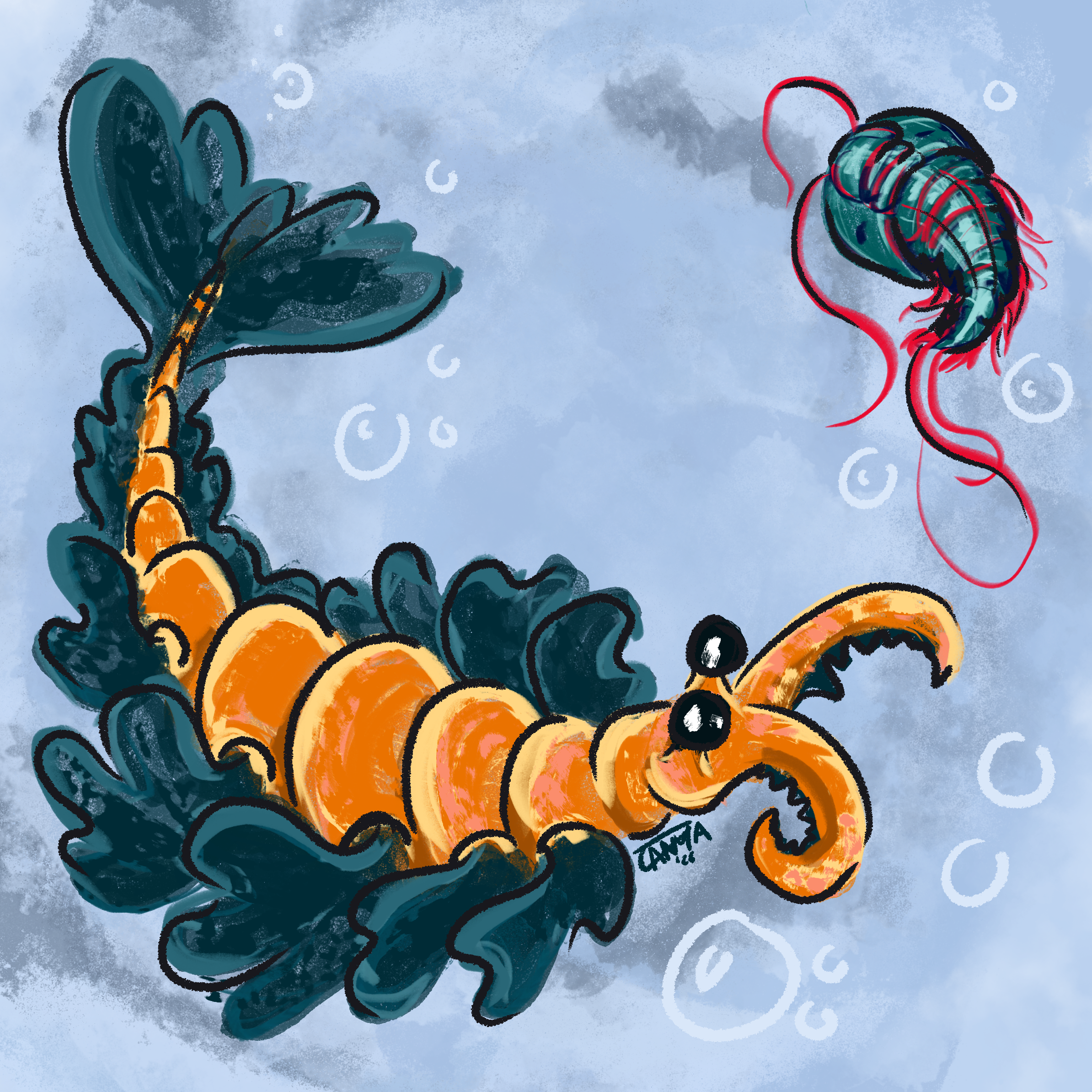
Fossils can tell us who lived in ancient ecosystems, but they rarely tell us directly who ate whom. Yet these interactions are important if we want to understand not only which species disappeared during past extinction events, but why they disappeared and what happened to the wider ecosystem as a result.
Here we will explore how species traits can be used to reconstruct plausible food webs from the fossil record. These food webs allow us to move beyond simply counting species and begin asking how ancient communities were structured, and how they might have responded to environmental change. Using these reconstructed food webs we can begin to explore extinction cascades, where species disappear not only because of the initial environmental disturbance, but also because all of the species they depend on have gone extinct.
Using examples from the fossil record, including the Early Toarcian extinction event, we can begin to identify how primary and secondary extinctions combined to reshape ancient marine ecosystems, and why some communities might be more resilient than others. Finally, taking a step back, we can ask what these food webs can tell us about survival as well as extinction. By considering not just which species disappeared, but how those species were connected within their communities, we can begin to understand why some ecosystems were more vulnerable to collapse than others.
Callovian Coleoids: Edge Effects and Palaeoecology at the Boundaries of Oxygen Minimum Zones
Professor Ru Smith (University of Liverpool/Universiti Malaya)