
Jurassic Seas

Indoor Meeting
25th October 2025 13:30 BST
Leeds City Museum
Yorkshire is famous for the rocks and fossils of it’s Jurassic-aged east coast. The Lower Jurassic strata of the Yorkshire Coast span an interval from the uppermost Hettangian at Redcar through to the topmost Toarcian at Ravenscar, with faults and other structures repeating the succession along different bays and beaches. During this interval a mass extinction occurred in the early Toarcian, and in these parts was associated with a marked decline in oxygen levels within the water column and formation of organic rich shales.
This meeting will explore the geochemistry, invertebrate and vertebrate faunas of the Early Jurassic, from a very Yorkshire perspective but also providing comparisons from other equivalent sections.
Why Leeds? The University of Leeds has a strong research history in Early Jurassic marine chemistry and ecosystems.
Getting to Leeds City Museum
Leeds City Museum is located in the City Centre of Leeds, their website contains a wealth of information to assist you in planning your journey
Visit Leeds City Museum | Leeds Museums and Galleries | Days out and exhibitions
Provisional schedule
13:30 – 13:45 Introductions and welcomes
13:45: – 14:20 Regional marine benthic turnover across the early Toarcian (Lower Jurassic; ~183 million years) hyperthermal event Meghan Jenkinson
14:25 – 15:00 Phosphorus, Fossils, and the Fate of Jurassic Oceans Dr Alisa C. Roper
15:00 – 15:20 Teas and Coffees
15:20 – 15:55 The mystery of Gyrosteus mirabilis – a gigantic sturgeon-like fish from the Jurassic of Yorkshire: historic concepts and outstanding questions Dr Samuel L. A. Cooper
16:00 – 16:35 What a big nose you have! A tale of two unusual Jurassic ichthyosaurs Dr Rebecca Bennion
16:35 – 16:45 closing remarks
Abstracts
Regional marine benthic turnover across the early Toarcian (Lower Jurassic; ~183 million years) hyperthermal event
Meghan Jenkinson (School of Earth and Environment, University of Leeds)
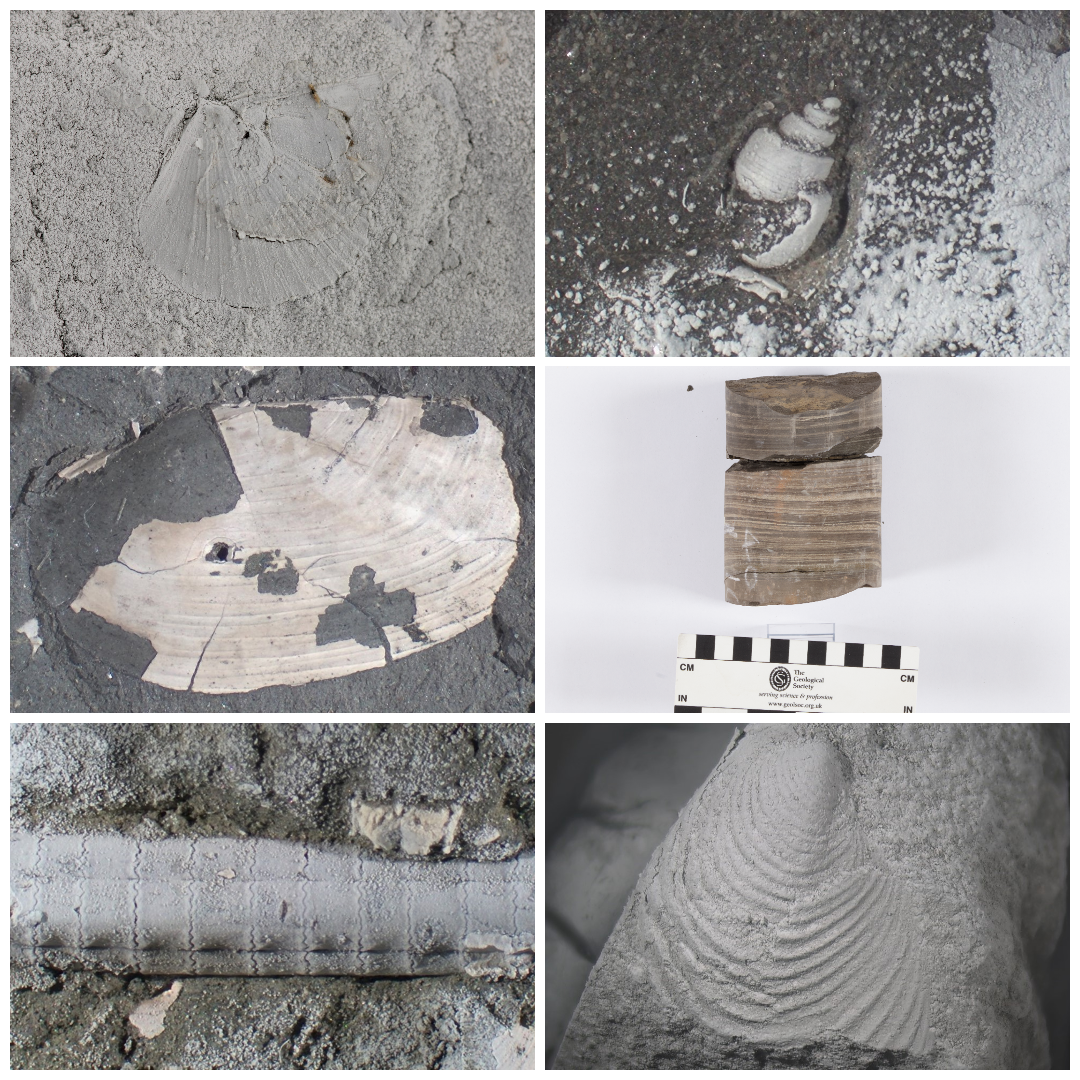
During the early Toarcian 5% of marine families and 26% of marine genera became extinct. The cause has long been attributed to marine anoxia – the so-called ‘Toarcian Oceanic Anoxic Event’ (TOAE) – recognised by the widespread deposition of organic-rich laminated black shales resulting from hyperthermal conditions and accompanying environmental perturbations linked to Karoo-Ferrar volcanism. In the Cleveland Basin (Yorkshire), benthic extinction during the TOAE is well constrained by the occurrence of laminated black shale, with full ecological recovery taking up to 7 million years. The TOAE is observed in many other NW European sections, but there is a lack fossil data, particularly from Toarcian sequences where laminated black shales are absent.
Here, we investigate species diversity across the late Pliensbachian-early Toarcian from six British sections representing a variety of facies from condensed limestones and marls, through low TOC mudstones to true laminated black shales. Rather than a distinct extinction horizon, we observe a faunal turnover in the early Toarcian in which typical late Pliensbachian taxa are replaced by new faunal assemblages. This suggest that, in addition to redox, other environmental factors such as temperature, ocean acidification, and nutrient availability likely influenced regional benthic turnover and secondary extinctions during the early Toarcian.
Phosphorus, Fossils, and the Fate of Jurassic Oceans
Dr Ailsa C. Roper (Environment Agency & School of Earth and Environment, University of Leeds)
Phosphorus is one of the most important nutrients in the modern oceans. It fuels marine productivity, shapes food webs, and influences whether seas are oxygen-rich or oxygen-poor. Because of this, changes in phosphorus cycling have been closely tied to some of the biggest environmental upheavals in Earth’s history.
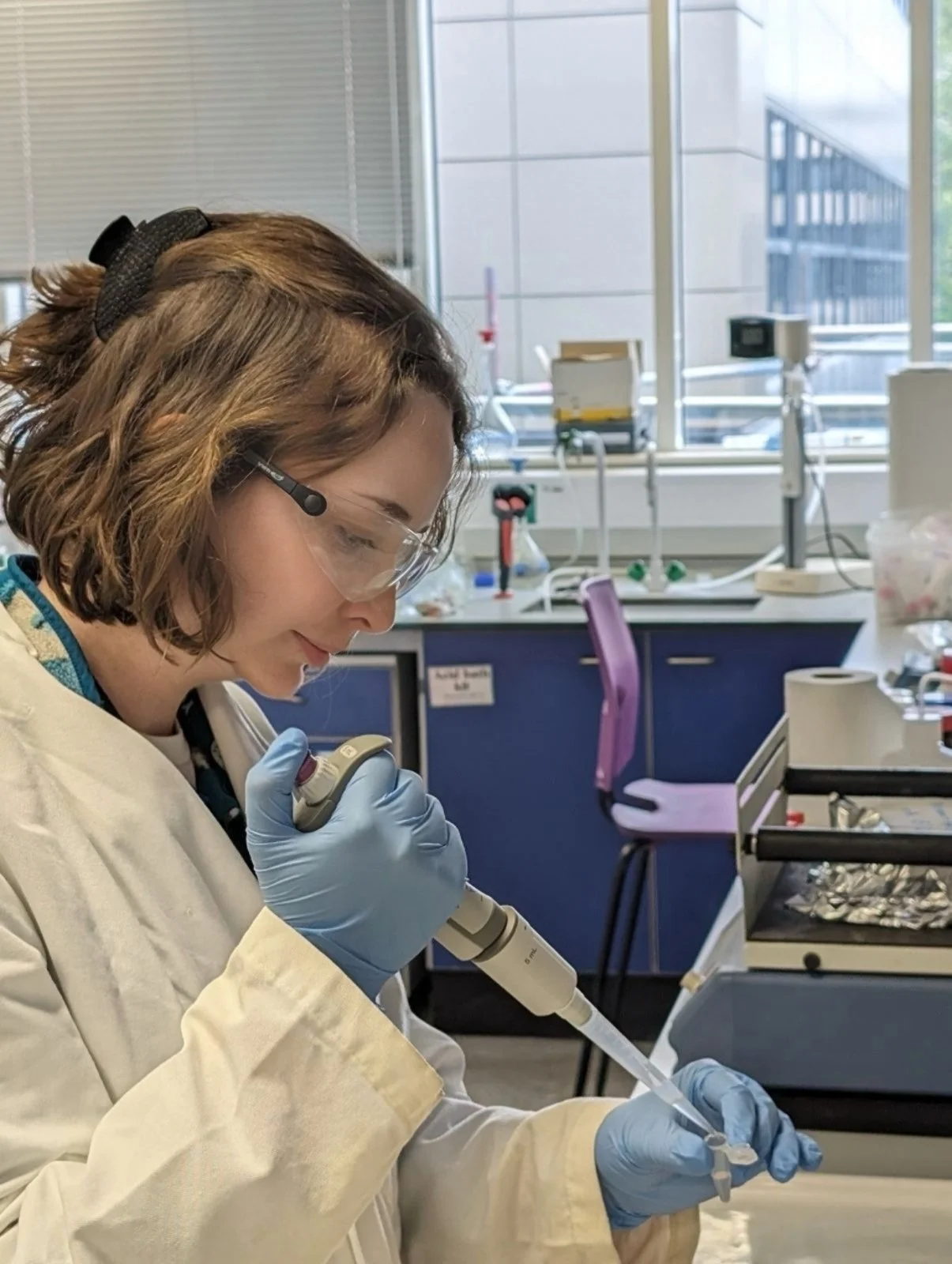
The Early Jurassic (around 200–170 million years ago) was a time of global warming, mass extinction, and widespread ocean anoxia, most famously during the Toarcian Ocean Anoxic Event, but the role of phosphorus in driving these changes remains unclear. We present a new approach, measuring phosphorus locked within the fossil calcite skeletons of belemnites, iconic squid-like animals of the Jurassic seas, to reveal how phosphorus levels in the water changed during this turbulent interval.
By constructing the first long-term record of fossil phosphorus concentrations, which spans 30 million years of the Jurassic, and comparing it with changes in redox and climate, this work shows that shifts in nutrient supply and recycling were linked with episodes of environmental stress. These findings shed new light on the fate of Jurassic oceans and highlight striking parallels with the present, where fertiliser use and climate change are reshaping nutrient cycles in our seas today.
The mystery of Gyrosteus mirabilis – a gigantic sturgeon-like fish from the Jurassic of Yorkshire: historic concepts and outstanding questions
Dr Samuel L. A. Cooper (Staatliches Museum für Naturkunde Stuttgart)
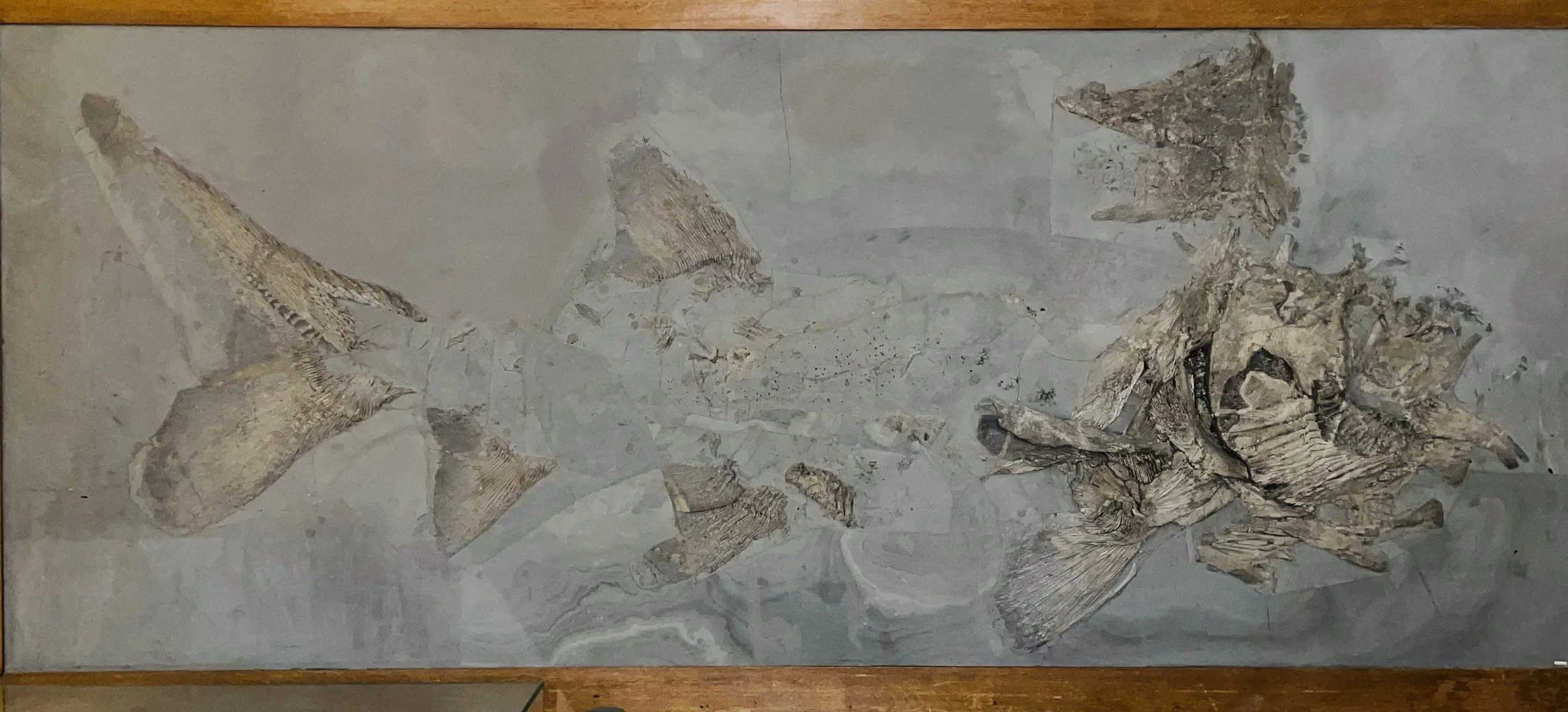
The evolutionary history of Acipenseriformes, the clade of fishes which today contains all living sturgeons (Acipenseridae) and paddlefish (Polyodontidae) is both longevous and complicated. Gyrosteus mirabilis ex. Agassiz is one of the largest (est. 6-7 meters total length) and oldest fossil acipenseriforms recognised, with the first remains of this species reported from Whitby in the early 19th Century. Early research misidentified remains of this species as a coelacanth, and then a squid, until being formally described and correctly identified as a sturgeon-like bony fish in the 1890s. Unfortunatly, Gyrosteus is only known from various isolated bones and fragmentary partial skulls and fins, with very little articulated remains available to help piece together this enigmatic leviathan of the British Lias. The fragmentary nature and a lack of research interest on this fish in the following century let to it being proposed as a junior synonym of either the Lower Lias Chondrosteus, or the Upper Lias Strongylosteus from Germany. A recently discovered partial skull described from the Upper Lias of Whitby offers a unique ‘Rosetta Stone’ to help reconstruct the elusive skull roof anatomy of Gyrosteus, and provides strong evidence to retain it as a unique taxon distinct from Chondrosteus and Strongylosteus. Here, I will present an overview on our current understanding of Gyrosteus, identify outstanding gaps in our knowledge, and frame the significance of this species in the broader context of acipenseriform evolution.
What a big nose you have! A tale of two unusual Jurassic ichthyosaurs
Dr Rebecca Bennion (Evolution & Diversity Dynamics Lab, UR Geology, Université de Liège; The Museum of North Craven Life, Settle)
One of the most iconic of all marine tetrapod groups are the ichthyosaurs, a diverse clade of Mesozoic marine reptiles which are known from spectacular Jurassic fossils from Western Europe. Ichthyosaurs are often compared to dolphins as a textbook example of evolutionary convergence – the independent evolution of a similar morphology from different ancestral starting points.
The Jurassic rocks of the Yorkshire coast show a diverse ichthyosaur fauna including two of the most unusual ichthyosaurs of all time: Eurhinosaurus (a large ichthyosaur with a very long snout, and an upper jaw considerably longer than the lower) and Temnodontosaurus (an ichthyosaur with multiple species and interesting adaptations for hunting and killing prey).
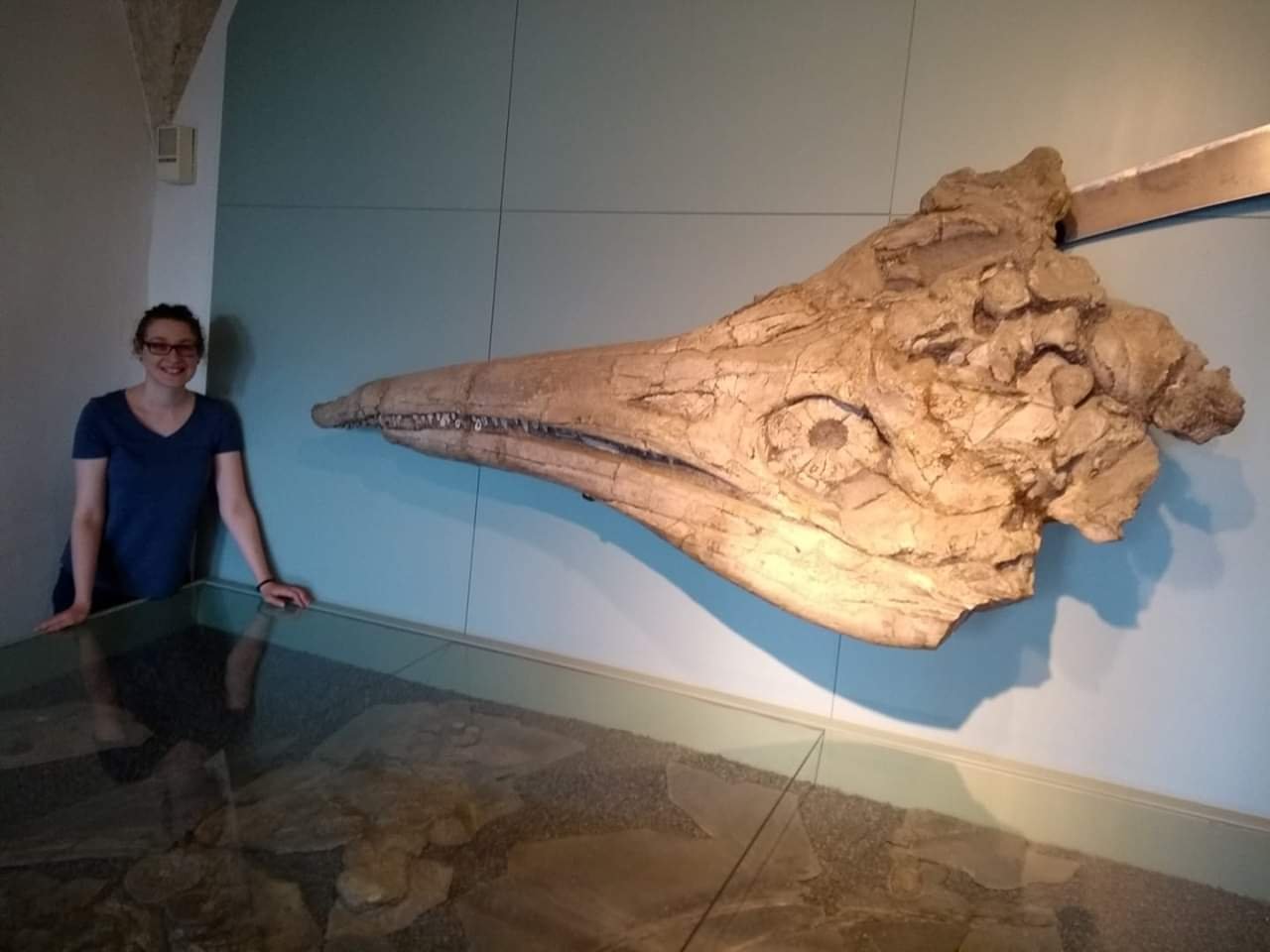
This talk will discuss recent research on the ecological roles these animals played in the Jurassic oceans and explore how well we can use modern and extinct cetaceans as ecological analogues.